






Introduction
Bacterial infections can significantly affect your health and everyday function. Therefore, doctors recommend a course of Clindamycin 300 mg to clear the infection and help you live a healthy life. Here you will learn about the uses, benefits, and dosage of the Clindamycin antibiotic.
What Is Clindamycin 300 mg?
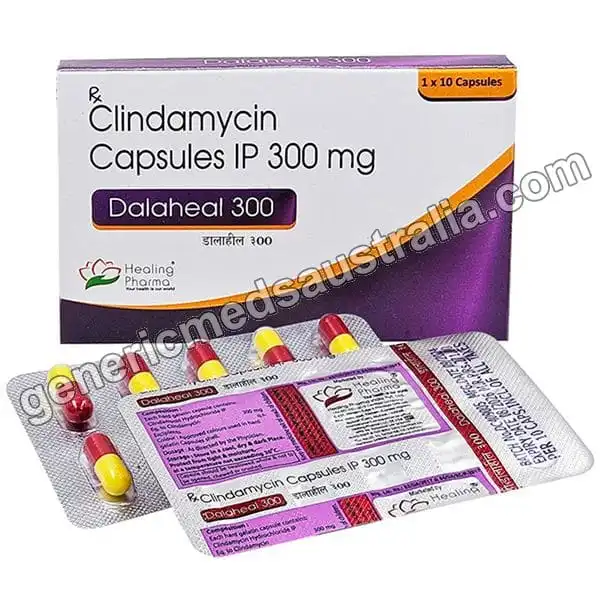
Clindamycin 300 mg is an antibacterial widely recommended to treat a wide variety of bacterial infections. It includes Clindamycin as the primary ingredient, known for its effectiveness in interfering with bacterial development. Generally used, clindamycin is also known by its widespread brand name, Dalaheal 300 mg. It is beneficial for the treatment of contaminations influencing the skin, lungs, urinary tract, internal organs, blood, etc. Clindamycin 600 mg capsules are manufactured by Healing Pharma, India.
Uses of Clindamycin 300 mg Capsule
Here are the main Clindamycin 300 mg uses detailed below:
- It is utilised to treat a wide range of bacterial contaminations for different parts of the body.
- Highly useful in dealing with infections like streptococcal pharyngitis, cellulitis, pneumonia, otitis media, and urinary tract infections.
- Useful for people with a known hypersensitivity to penicillin as an alternative antibiotic.
How Clindamycin 300 mg Works
Clindamycin 300 mg is an antibiotic that significantly combats bacterial infections by interrupting their protein synthesis. This drug targets bacterial ribosomes, which are the cellular structures responsible for protein production. By binding to ribosomes, it blocks protein synthesis and prevents them from functioning on their own. As a result, without the potential to form crucial proteins, bacteria cannot grow and replicate.
How to take Clindamycin 300 mg?
Take Clindamycin 300 mg exactly as your healthcare professional instructs. Swallow a tablet with a full glass of water to prevent it from getting stuck in the throat. Do not crush, chew, or split it into pieces. It may be taken with food or on an empty stomach, as advised by your doctor. Do not lie down for at least 30 minutes after taking the dose.
Benefits of Clindamycin 300 mg
Listed here are some of the primary benefits of Clindamycin for bacterial infections you can achieve with its course:
- It effectively treats hard-to-reach joint and bone infections, such as acute or chronic osteomyelitis.
- It is used to treat acute lower respiratory tract infections, which include aspiration pneumonia, lung abscesses, and empyema.
- When used simultaneously with other agents, it manages severe peritonitis, intra-abdominal sepsis, or gynaecological or pelvic inflammatory infections.
- It is useful in decreasing exotoxin formation in severe medical complaints like necrotising fasciitis or toxic shock syndrome.
- It clears deep-rooted, complicated skin structures, acute cellulitis, and surgical skin wounds.
Available Strengths
Here are some available strengths of Clindamycin antibacterial that can be recommended based on infection severity.
Side effects of Clindamycin 300 mg
Clindamycin side effects are listed below:
- Mild diarrhea
- Metallic taste in the mouth
- Skin rash
- Hives
- Nausea
- Vomiting
- Stomach pain
- Allergic reactions
- Esophageal problems
- Liver issues
Clindamycin 300 mg Dosage
The Clindamycin dosage is determined by the medical professional after monitoring certain treatment factors such as age, body weight, intensity of the infection, health status, and other medicines. Since the treatment is personalised according to the condition, it should be followed exactly as prescribed by the healthcare professional.
Missed dose: You may take the missed dose as soon as possible unless the next dose is due in a while. In case of next dose is approaching, skip the missed dose and continue with the prescribed treatment from the following dose to prevent double doses. Never take extra doses to make up for the missed dose.
Overdose: Overdosing on this medicine may cause unwanted health complications. Call the medical emergency helpline or your healthcare provider in case you overdose on it.
Clindamycin 300 mg Drug Interactions
Drug interactions of Clindamycin 300 mg can include:
- Atracurium
- Vecuronium
- Succinylcholine
- Cholera vaccine
- Typhoid vaccine
- Clarithromycin
- Itraconazole
- Ritonavir
- Verapamil
- Rifampin
- Phenytoin
- Carbamazepine
- St. John’s wort
- Warfarin
Warnings & Precautions
- Clindamycin 300 mg shows no severe interaction with alcohol consumption. However, it’s better to avoid or limit drinking alcohol during a serious infection.
- This medicine is considered acceptable and safe to administer during pregnancy, especially during the second and third trimesters.
- This medicine may pass into human breast milk in small quantities. Thus, use it with proper medical guidance and observation.
- Wait before driving vehicles or using heavy machinery to know how the medicine affects you.
- People allergic to clindamycin or any other ingredient used in this tablet should not move forward with this treatment.
- Discuss the previous medical records with the healthcare professional before starting the treatment.
- Consult your child’s paediatrician before administering this tablet.
Conclusion
Clindamycin 300 mg capsule is an oral antibacterial used to treat a broad range of bacterial infections of the lungs, blood, skin, respiratory tract, urinary tract, and much more. When the medicine is used with appropriate medical guidance, it helps block the development and progression of bacteria. Talk to your healthcare provider beforehand and follow the recommended treatment only.
FAQs:
What is Clindamycin 300 mg used for?
This medicine is used for the treatment of bacterial infections. It is an antibacterial medicine effective against specific anaerobic bacteria and certain gram-positive aerobic bacteria.
Is clindamycin a strong antibiotic?
Yes, this medicine is a broad-spectrum, strong antibiotic recommended for severe bacterial infections.
How should Clindamycin 300 mg be taken?
Take this medication orally, by mouth, with a full glass of water, lying down for at least 30 minutes afterwards. It may be taken with food or on an empty stomach, preferably with food to avoid stomach upset.
Can Clindamycin 300 mg treat viral infections?
No, this medication cannot treat viral infections.
What are the common side effects?
Some of the common side effects of this medication are nausea, diarrhoea, abdominal pain, vomiting, and a metallic taste in the mouth.
Can clindamycin cause diarrhoea?
Yes, diarrhoea is a common effect of this medicine.
What should I do if I miss a dose?
You may take the missed dose as soon as possible unless the next dose is due in a while. In case of nextis dos approaching, skip the missed dose and continue with the prescribed treatment from the following dose to prevent double doses. Never take extra doses to make up for the missed dose.
Can I drink alcohol while taking clindamycin?
While there is no direct interaction between them, it is better to avoid drinking alcohol while taking this treatment.
How long does clindamycin take to work?
This medication usually starts working within 45 minutes of ingestion, though noticeable improvement in your symptoms may take 48 to 72 hours.
Christian Hipkiss
July 5, 2025 at 9:45 am
Glad to have found this antibiotic online. Dalaheal 300 mg works as well as the one I used in the hospital.
Jamie Despeissis
September 3, 2025 at 9:17 am
Clindamycin 300 mg cleared my skin infection faster than expected.