
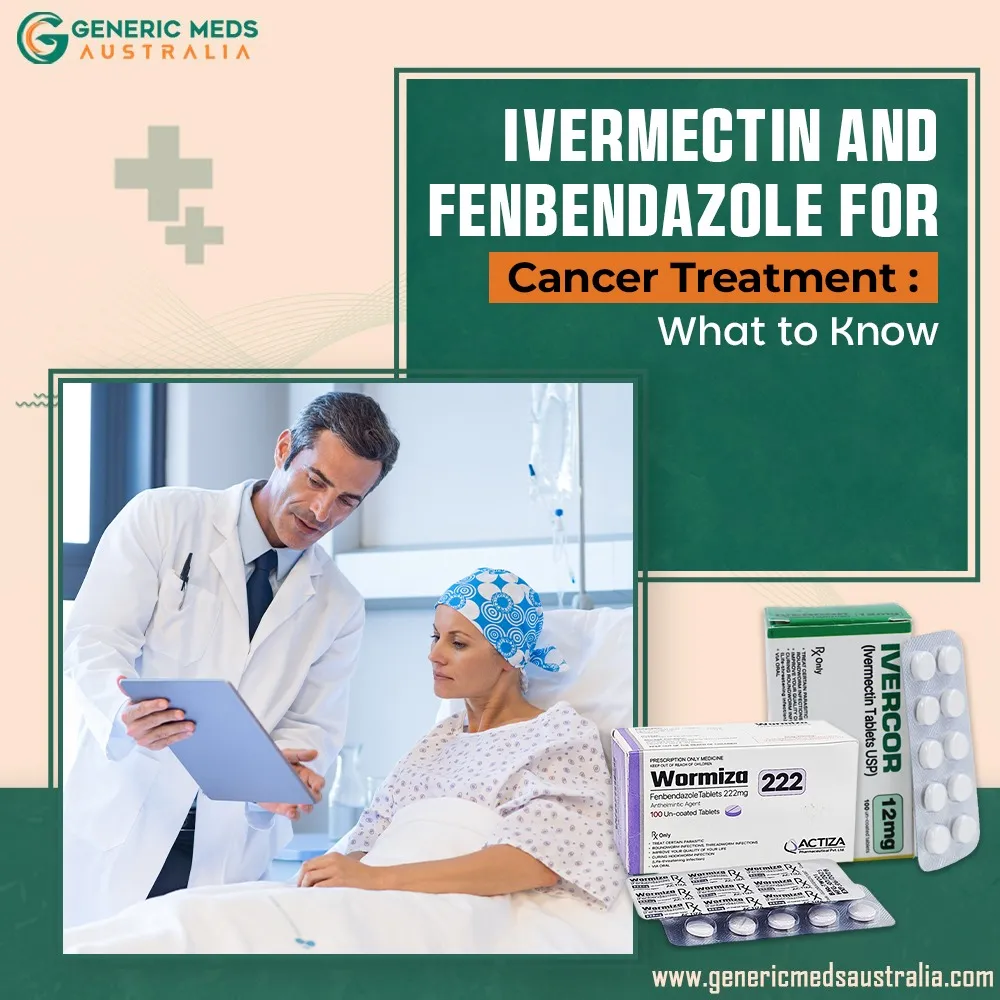
Ivermectin and fenbendazole are used to treat cancer; you’ve undoubtedly read blogs or videos about them online. Social media users quickly circulate stories about their own experiences, and all of a sudden, everyone is discussing these medications as if they were miraculous treatments. The problem is that something doesn’t necessarily function as people say just because it’s being talked about all over the place. Online comments and the results of genuine clinical studies differ greatly. This blog explains the facts regarding these medications, distinguishes between science and hype, and explains why using untested therapies may be dangerous when dealing with a serious illness like cancer.
What Are Ivermectin and Fenbendazole?

For many years, humans and animals have been treated for parasitic infections with the antiparasitic drug ivermectin. It paralyses parasites so that your body can get rid of them. For ailments like worm infestations and river blindness, doctors recommend it. However, another antiparasitic drug commonly used in veterinary medicine to treat worms in animals is fenbendazole. In most nations, it is rarely prescribed to people. The initial intent of these medications was to target parasites. Neither was intended nor authorised as a cancer therapy. Knowing the true nature of these drugs makes it easier to understand why the cancer claims were made in the first place and why they aren’t always applicable to the treatment of human tumours.
The Origin of the Cancer Treatment Claims

Online forums, social media, and individual blogs were the sources of the ivermectin and fenbendazole cancer therapy claims rather than medical establishments. Stories about how these medications allegedly benefited them, or someone they knew, began to circulate. Due to their emotional and intimate nature, these anecdotal stories circulate swiftly. What began as a collection of disparate stories became viral content. Facebook groups, TikTok postings, and YouTube videos reinforced these assertions. Individuals started experimenting on themselves, recording their experiences, and inspiring others to follow suit. The story was straightforward: these readily available, inexpensive medications were effective where traditional therapy was purportedly ineffective. Some people pointed to lab studies showing these drugs could kill cancer cells in petri dishes as evidence. But here’s the problem: there’s a massive gap between what happens in a test tube and what happens in a human body. Lab results showing cancer cell death don’t equal real-world treatment success in living patients.
Scientific Research: What Do Studies Actually Say?

When researchers actually look at ivermectin cancer treatment research in clinical settings, the picture changes dramatically. Most studies on ivermectin have focused on its antiparasitic properties, not cancer. The few studies exploring potential anticancer effects were done in laboratories on isolated cancer cells, not on living patients. Real clinical trials testing these drugs specifically for human cancer are extremely limited. Fenbendazole cancer treatment research is even sparser. There are virtually no rigorous human clinical trials proving it works against cancer in people. Some small laboratory studies suggest theoretical possibilities, but that’s worlds apart from proven treatment. The scientific community hasn’t found sufficient evidence to support using either drug as a cancer therapy. Doctors and oncologists don’t prescribe them for this purpose because the research doesn’t back it up. Ivermectin cancer treatment dosage protocols for cancer don’t exist in mainstream medical practice because the drug wasn’t designed or tested for that use. Without proper clinical trials on actual patients, we simply can’t say these treatments work.
Risks and Safety Concerns
Ivermectin Risks (High Dose or Misuse)
- High doses of ivermectin for cancer in humans can cause neurological side effects including dizziness, confusion, and tremors
- Liver toxicity concerns emerge when the drug is used at doses far beyond its approved levels
- Drug interactions become serious when combined with other medications—ivermectin can amplify the effects of blood thinners and other drugs
- Using ivermectin tablets without medical supervision means no one’s monitoring your health for complications
- Taking an ivermectin 80 mg tablet or higher doses designed for animals puts your body at risk
Fenbendazole Risks in Humans
- Unknown long-term safety profile because fenbendazole hasn’t been extensively studied in human patients over time
- Lack of human pharmacological data means doctors don’t fully understand how it affects various organs and systems in people
- Risk of self-medication complications increases dramatically when people take veterinary-grade fenbendazole 444 mg without prescription oversight
- No established safe dosing guidelines exist for humans using this drug
- Side effects in humans remain largely undocumented because it’s primarily used in animals
Dangers of Self-Medication in Cancer
Time is of the essence when someone has cancer. Every day matters. Your illness may worsen if you put off tried-and-true cancer therapies in favour of trying ivermectin and fenbendazole. Cancer doesn’t hold back. You have the best chance of battling it if you receive chemotherapy, radiation, or surgery as soon as possible. Your cancer may have progressed to a more difficult-to-treat stage by the time you discover an untested medication isn’t working. You forfeit valuable months. Additionally, self-medication results in no medical monitoring, so medical professionals are unaware of what’s going on within your body. If treatment is postponed, a cancer that is curable may turn fatal. So, instead of questioning “Do ivermectin and fenbendazole cure cancer?”, question “Do we have enough time left to experiment?”
Expert Medical Advice and Final Verdict
Due to a lack of clinical data, doctors and oncologists routinely recommend against using ivermectin and fenbendazole for the treatment of cancer. Approved alternative medications for cancer therapy have undergone extensive research and proven to be effective in human studies. These antiparasitic drugs have not been authorised for use in oncology by reputable health organisations such as the FDA and WHO. When a patient is diagnosed with cancer, they should speak with a skilled oncologist who can provide evidence-based therapies that are particular to their situation. Self-administration of untested treatments has serious hazards, such as worsening treatment results and disease progression. There is still broad medical agreement that proven cancer treatment alternative drugs, when started early, have significantly higher survival rates than experimental or unapproved options.
Conclusion
The debate over Ivermectin and fenbendazole for cancer is a reflection of people’s need for accessible, reasonably priced therapies. Hope, however, shouldn’t take the place of proof. Examining genuine clinical data rather than anecdotal claims is necessary to understand the difference between ivermectin and fenbendazole, and crucially, whether they treat cancer. Accurate information should be provided to patients with cancer diagnoses so that treatment decisions may be made. Access to treatments with proven safety profiles and efficacy data is ensured by speaking with trained medical specialists. Effective therapy is still based on known oncological techniques, even as research on ivermectin cancer treatment continues. Better health outcomes can be achieved by informed decision-making based on scientific fact rather than conjecture.
FAQs
How much ivermectin to take for cancer treatment?
There is no established dosage because ivermectin is not approved for cancer. Taking ivermectin and fenbendazole tablets without medical guidance is dangerous and ineffective.
Is fenbendazole approved for human cancer treatment?
No. Fenbendazole for cancer in humans has no approval. It’s a veterinary drug without clinical evidence for human cancer use.
Can diet alone cure cancer?
No. Diet supports overall health but cannot cure cancer. Proven medical treatments are necessary for cancer management.
Why is self-medication dangerous in cancer?
Cancer progresses quickly. Delaying proven treatments while self-medicating with unproven drugs allows disease advancement, reducing survival chances significantly.
Can ivermectin interact with alcohol or other drugs?
Yes. Ivermectin interacts with blood thinners, seizure medications, and other substances. Alcohol amplifies side effects. Medical supervision prevents dangerous interactions.